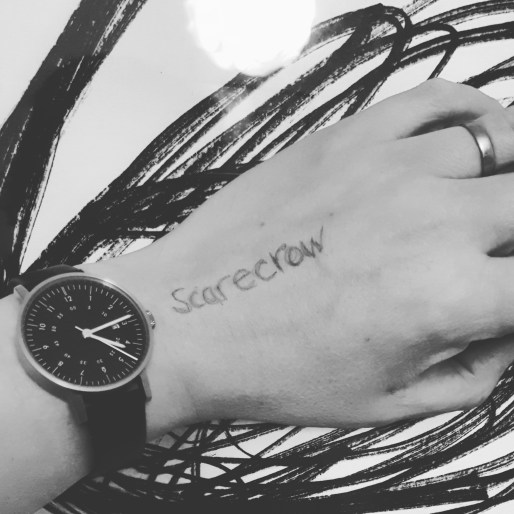
Book launch, Scarecrow: 17 March

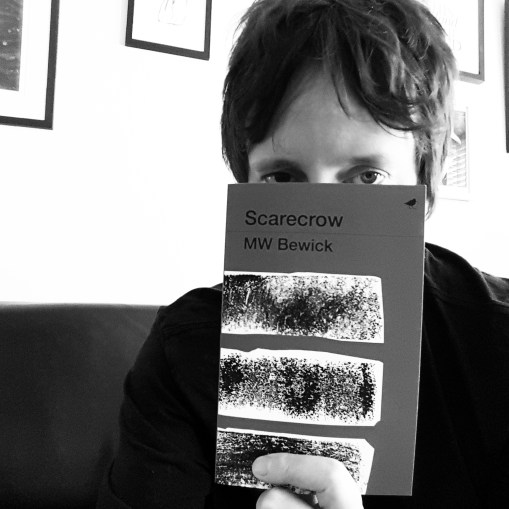
Launch Poster

Well here it is. This has been simmering for around three years now and the poetry cauldron of trouble is about to bubble over. We’re cooked, done… and it’s over to you.

Scarecrow is published on Friday 17 March and is being launched at The Wivenhoe Bookshop, Wivenhoe, Essex, on the same day, at 6.30pm for 7pm. I’ll be reading some of the book’s poems and looking at their roots and the creative process involved in writing them.

Scarecrow is about place. It’s about London and Essex, and it’s about being between places too. Many of the poems were written on trains to and from the capital. It’s about trying to be somewhere and being nowhere – and about finding your place.

That’s the contradiction of the ‘scarecrow’, I suppose. S/he’s grounded, stuck, marooned, and also isolated, outcast, alone. It scares away rather than attracts. How can it feel ‘at home’, or ‘at one’, when it endures such penury of existence?

To be ‘home’ means to be accepted, and to accept. The scarecrow stands outside of such considerations, yet remains within our gaze, within our judgement.

The scarecrow could be described as ‘everyman’. I hope readers will feel that connection. But I think, at a deeper level, this modern monad is also the human who truly understands what it is to travel because travel is what is needed, or forced. To travel and enter, and yet remain always at the periphery, always being the outsider.

The previous book by Dunlin Press, who publish Scarecrow, and whom with I am indelibly attached, is The Migrant Waders, and I feel maybe some of the urgency and sorrow that marked that book, and which all migrants no doubt understand, has rubbed off here.

So there’s the contradiction again. To be present, and yet have no agency. To have to travel, and yet never to truly arrive.

If you’re in or around Wivenhoe on the 17th, or can be, come along to the bookshop – let them know you’re coming – and we’ll raise a glass to all scarecrows.

And do get in touch if you’d like me to come and read some of these poems at your own poetry event.

If you’d just like to get hold of a copy of the book, you can do so here, or ask your independent bookshop to order one from Dunlin Press.

If you’re a journalist who would like a review copy, drop me or the publisher a line and we’ll sort one out.

MWB
 

Falsework and scaffolds

17016133_10158378768490445_8361750221850130442_o

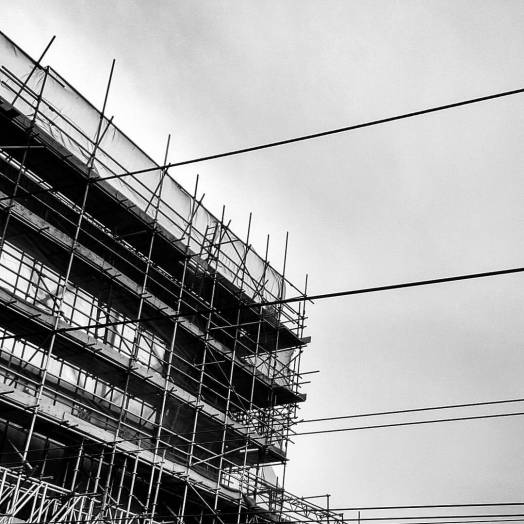
In construction sites we see our mortality, our grand lie, the potential for the futility of all human creation. The scaffold grounds us rather than lifts us. It is the very picture of our ennui, the dream of our true existence.

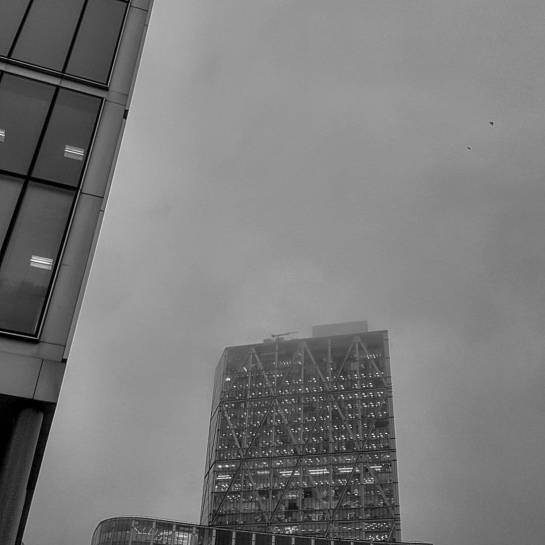
In the writing of my upcoming collection of poetry, Scarecrow, the ever-evolving skyline of London – which is itself a euphemism for the loss of homes, the displacement of families, the estrangement of individuals, the eradication of cultures etc etc – was a constant presence.

Even at the other end of the rail tracks, out in northeast Essex, the sense of almost violent change etched itself into consciousness – on the platforms, in the pubs, and as the opaque tides of the  Colne sludged their way in and out.

There, ‘the arms that thrust above the streets / the colour of blood’; and then, elsewhere, the ‘galium hedgerows’, the ‘over-luxuriant trees’, the ‘blooms of frost’ on flint walls.

These collocations are just some of the tensions that the poems explore – although I’m not sure ‘tension’ is really the right word. It just ‘is’. And the Scarecrow just stands there, seeing as much as it can.

MWB

Preview: Scarecrow is coming

img_20170216_134402_479
I love a proper big art project – one that starts as isolated moments and then starts to coalesce, condense into some serious thinking, serious time and serious work. I’ve just completed one.
 
About four years ago I went to a Poetry Wivenhoe evening and was encouraged to go away and write something, and to read it during the next session. I hadn’t written any poetry since I was a teenager – just features for magazines, songs for bands and drafts of novels. Many people I knew put down poetry as twee or pretentious. I wasn’t sure why I wanted to engage with it again, but somehow I did.
 
Also, much modern poetry has become assimilated into the entertainment industry. Big contracts, tours, performance. Big soundbites, loose rhymes, dull platitudes etc. No ideas. The kind of stuff you hear on Radio 4. The old radical, intellectual and left-wing poets have been interred. Today’s avant-garde hardly gets a glance.
 
I set about writing Scarecrow as I headed to and from the day job of editor/journalist. It’s a mix of poems about London and here, Essex, and up north in Cumbria too (occasionally), and, mostly, about the spaces between them. And about time. Because everything is about time, really – and if it isn’t, it should be.
 
I don’t know if it’s radical, or even if its politics jump from the pages of the collection. I do know that it’s – finally – pretty much the book I wanted it to be: squared by modernity, folky round the edges, surreal in some detail. It tries not to falter. It tries not to disappear.
 
We’re launching (Dunlin Press is launching) Scarecrow at Wivenhoe Bookshop on Friday 17 March. I’ll read some of the poems and we can all have glass of wine – the Bookshop launches are always fun! Come along if you can.
 
But did I find out why I wanted to engage with poetry again? Well, yes.
 
Because sometimes we need more than journalism and internet opinion pieces. And sometimes we need more than the templated and bourgeois narrative structures of many novels. We need language to work harder; thought to work harder.
 
The world around us fractures and we need new ways of explaining it. Poetry can be a good start.

An early January edit

In January the ferry marsh is spare. Nearby there are godwits, little egrets, cormorants and, present in their sorrowful call, redshanks.

img_20170109_162737_925

It is dark at mid-afternoon, especially on the days when the sky starts charcoal and lightens to battleship grey – but no more.

At the writing desk the blinds are up and the silver birch is peeling; blue tits flit through it on their way to the woods. The train horns are reminder of the city; the concrete; the glass.

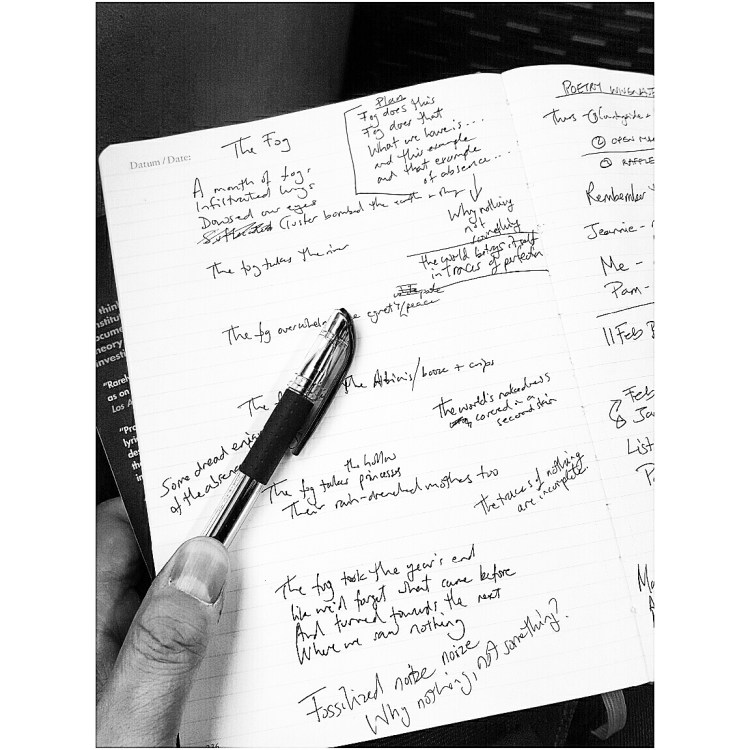
I have an old notebook with new writing – words, at least, nothing solid, though it is condensing, slowly. And I have a new diary pocked with ink-marks and scribbles.

img_20170104_112711_976


Before the noise of new writing, though, there is something else. Something coming. Something that has been here for a while. A book.

img_20170109_161744_560

MWB

New year, new website

img_20161229_181308_609
Flatford Mill – Constable’s ‘Haywain’ – was iced over in silver and blue

Happy New Year! And Happy new website!

You’ll notice that below is a complete set of entries for the Possible Fictions series of writing. This is gradually being migrated to this site’s Archive page, and new things will be appearing here – photos, book and event news etc.

If you’d like to keep updated, you can subscribe to this blog, or contact me via the form on the Contact page.

Wishing you a peaceful and determinedly creative 2017.

MWB

100-Word Fiction: ‘On Guernica’

The faces in anguish. The screams of a horse. The door of no exit. The eye of the blistered sun low as a ceiling bulb. The gasping bull that looks away. A glove for a hand – palm deep-lined. The screeching bird. The heavy mortal stagger of feet, the trampled flowers, the limp child in a mother’s paralysed arms. Flames from the rooftops and burning slate. A solitary candle thrust into despair. The cleaver pinned to the earth.

The dread contortions of life are frozen. That we made this altar is absurd. That we can forget it is the horror.

100-Word Fiction: ‘1 September 2015’

1 September 2015.

Global share prices tumble as visa checks are waived and bodies are washed up on a continent’s beaches. Dead. The stations and sports halls are full of refugees. We are learning new names and new vocabulary. There was no vocabulary for this. Old words are not sufficient. Very old words might just be. The images pile across front pages, television screens and media streams. They are not past or future, they are now. We are history and horror. A corner is turned. We plead for hope. Barbed wire barricades are to come.

This episode is currently unavailable.

100-Word Fiction: ‘Cancer Party’

It was the week she discovered Bob Kaufman and read a poem of his (now forgotten) while the rain streaked across the window of her suburban flat. It was the week the cancer first looked ineluctably fatal.

The news streamed in dolefully: news of supporters and opponents, the disaffected and the quietly optimistic, as if they were some covert vigilante force, untrustworthy renegades all, double agents plenty.

The news was totemic, untouchable. The language was all wrong. The words she was hearing, the words that remained despite visits to the hospital – they were words beyond the window, beyond the rain.